Flatter, Faster, More Fragile? The Human Risks of Restructuring
 Dr Jenny Tan30 Sep 2026 · 1 min read · First published by Enterprise Risk magazine, Institute of Risk Management (IRM)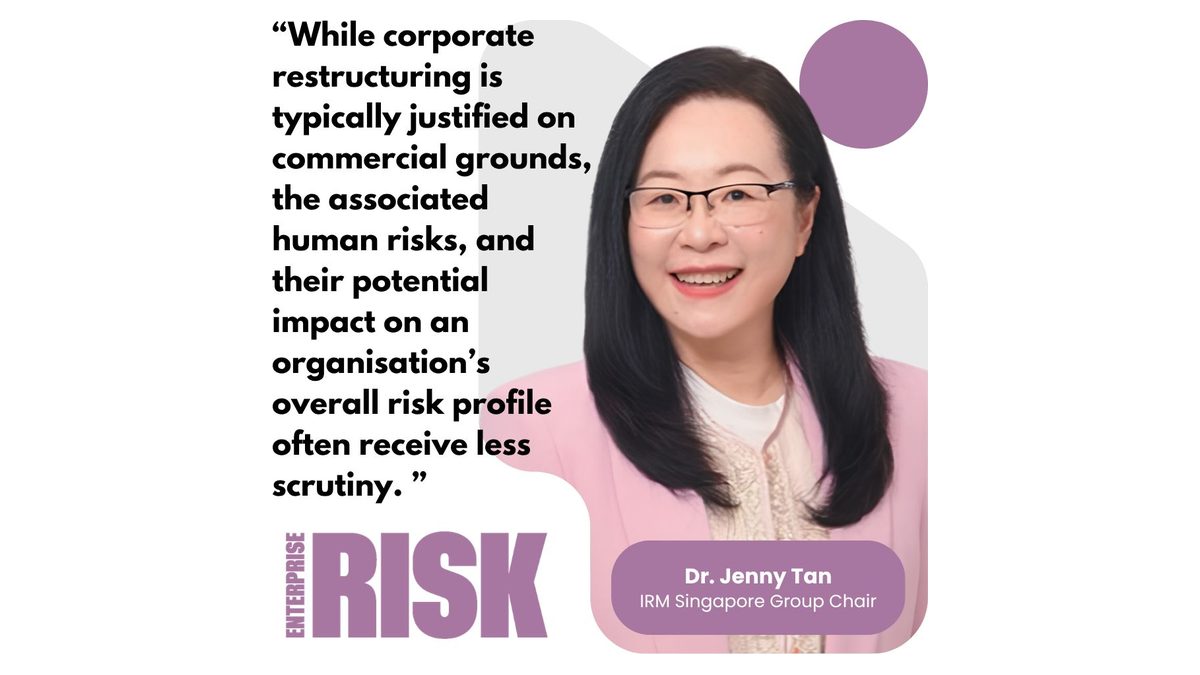
Writing for Enterprise Risk, the Institute of Risk Management's magazine, as Chair of the IRM Singapore Group, Jenny starts from Uber's reported restructuring of September 2026: around 3,300 corporate roles cut, fewer management layers, wider spans of control and far fewer fully remote roles. The company's stated aim is clearer ownership and faster decisions. Jenny's question is what such changes do to an organisation's risk profile, which tends to receive far less scrutiny than the commercial case.
She works through the governance questions in turn. When positions disappear, does every control still have an accountable owner? Can a manager with a much larger team still supervise judgement-heavy work and review the exceptions? How much documented and tacit knowledge leaves with departing staff, a loss that US Government Accountability Office reviews of federal workforce cuts have documented? And while the new structure beds in, who actually owns which decisions and handoffs?
Succession is a risk she knows first-hand from leading her own team through such a change. Fewer management roles mean fewer stepping stones for future leaders, so progression has to be reframed around skills and knowledge, and succession plans need revisiting after the redesign. Research on psychological safety adds another warning: job insecurity makes people markedly less willing to raise concerns, just when management most needs to hear them.
Finally, the work does not leave with the roles. Remaining staff absorb it, and the fatigue, stress and disengagement that follow drive human error and dampen the healthy risk-taking that innovation depends on. Her conclusion: judge a restructuring not only by its savings and reporting lines, but by evidence that its governance risks were part of the plan.
Key takeaways
- When roles disappear, confirm that every control still has an accountable owner.
- A wider span of control is a governance question, not a numbers game: can the manager still supervise the work?
- Capture institutional and tacit knowledge before people leave, not after a failure exposes the gap.
- Revisit succession plans and role clarity after the redesign, and check that people still feel safe to speak up.
- Measure a restructuring's success by its governance as well as its cost savings.
Read the full article at Enterprise Risk magazine, Institute of Risk Management (IRM)
Enjoyed this article?
Subscribe for new articles, or invite Jenny to speak on this topic at your next event.
Comments